July 4, 1776 – “It is impossible to rightly govern a nation without God & the Bible.” George Washington

Image result for george washington praying

6/27 ~ This day in history: Jas Smithson endows Smithsonian Ins.

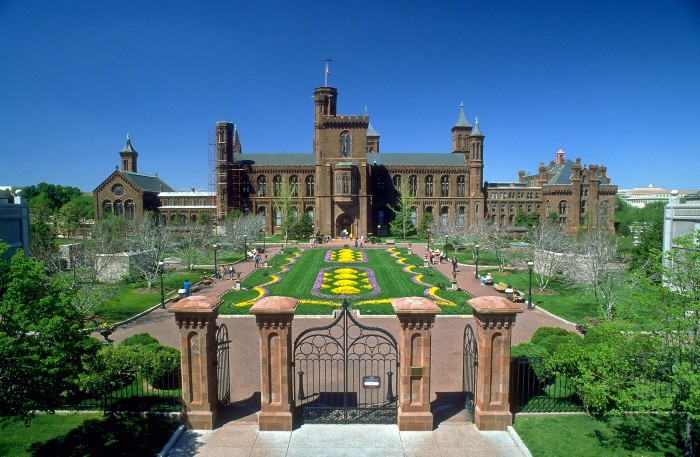
Located directly above the National Museum of African Art, S. Dillon Ripley Center, and Arthur M.Sackler Gallery, the 4.2-acre Enid A. Haupt Garden is actually a rooftop garden. It comprises three separate gardens, each reflecting the cultural influences celebrated in the adjacent architecture and the museums below. (Photo by Dane Penland)

British scientist James Smithson died on June 27, 1829. He left an endowment “to the United States of America, to found at Washington, under the name of the Smithsonian Institution, an “establishment for the increase and diffusion of knowledge among men.” Some regarded his bequest as a trifle eccentric, considering Smithson had neither traveled to nor corresponded with anyone in America.

Related image

A fellow of the venerable Royal Society of London from the age of twenty-two, Smithson published numerous scientific papers on mineralogy, geology, and chemistry. He proved that zinc carbonates were true carbonate minerals, not zinc oxides; one calamine (a type of zinc carbonate) was renamed “smithsonite” posthumously in his honor.

An act of Congress signed by President James K. Polk on August 10, 1846, established the Smithsonian Institution. After considering a series of recommendations, which included the creation of a national university, a public library, or an astronomical observatory, Congress agreed that the $508,318 bequest would support the creation of a museum, a library, and a program of research, publication, educational outreach, and collection in the natural and applied sciences, arts, and history.

The collections and libraries of the Smithsonian have continued to grow through donations and purchases. Today, the Institution comprises 19 museums, 144 affiliate museums, and 9 research centers throughout the United States and the world. The original Smithsonian Institution Building is popularly known as the Castle. Visitors to Washington, D.C., can frequent a variety of Smithsonian facilities including the National Museum of Natural History External, which houses the natural science collections, the National Zoological Park External, the National Museum of the American Indian External, and the National Portrait GalleryExternal. Opened in 2016, The National Museum of African American History and Culture External is the latest addition to the Smithsonian Institution’s collection of museums.

The National Air & Space Museum External, which exhibits marvels of aviation history such as the Wright brothers’ 1903 Flyer and Charles Lindbergh’s airplane, the Spirit of St. Louis, has the distinction of being the most visited museum in the world.

Tuesday 6/26 ~ Playing on the strings of your heart

The scripture for today, June 26 (6/26) is 1st Chronicles 6:26ff as found in the Old Testament of the Bible.

OldOldTunes-Thumbnail“Elkanah his son, Zophai his son, Nahath his son, Eliab his son, Jeroham his son, Elkanah his son and SAMUEL his son. The sons of Samuel: JOEL the firstborn and Abijah the second son.”

This is a little long, but I think you will enjoy it.

The prophet Samuel came from a musical family who descended from Levi’s son Kohath. Samuel’s son listed in this scripture was Joel. Verse 33 called the son of Joel and grandson of Samuel “Heman the musician”. Just what did Heman the musician do?

David told the Levites to appoint “singers to sing joyful songs, accompanied by musical instruments: lyres, harps, and cymbals“. Heman was the first one they appointed (I Chronicles 15:16f) and he had two assistants ~ Asaph and Merari (I Chronicles. 6:39, 44). David put them in charge of the music in the house of the Lord and they performed their duties according to the regulations (verses 31f).

So what David appointed was a choir and orchestra.  When David first appointed them, Heman had 120 relatives in his clan, and his assistants had 220 and 130 in their clans (I Chronicles. 15:5-7; 19-22; 27-28) so they had a total of 470 musicians. Wow! And these musicians had a full-time job!

They were to minister before the Lord “according to each day’s requirements” of sacrifices as written in the Law of Moses. Heman and the others were responsible for sounding the trumpets and cymbals and playing the other instruments ~ lyres, harps, and cymbals (15:19-21) ~ for sacred song (16:37-42). In addition to playing the prescribed lyres, harps and cymbals, trumpets were to be sounded to announce sacrifices, etc. (16:4-6).

By the time David was old, there were “four thousand…to praise the Lord with the musical instruments” (I Chronicles 23:5)! What an amazing choir and orchestra they had by this time! Remember, they were all male Levites, and were to help Aaron’s descendants, the priests, in the temple every day and at special feasts (verse 28, 30f). And what instruments were they still playing? Cymbals, lyres and harps “for the ministry at the house of God” (I Chronicles. 25:1 & 6).

Years later after David died and his son Solomon had completed the grand Temple in Jerusalem (II Chronicles. 5:1), “all the Levites who were musicians…stood on the east side of the altar dressed in fine linen and playing cymbals, harps and lyres, accompanied by 120 priests sounding trumpets. The trumpeters and singers joined in unison as with one voice to give praise and thanks to the Lord. Accompanied by trumpets, cymbals and the other instruments, they raised their voices in praise to the Lord” (verses 12-13).

Can you imagine such an orchestra and choir? The tinkling of the harps and lyres, with cymbals keeping the tempo, and trumpets calling attention to it all? And all those singers! Was God pleased? Indeed he was, for in the form of a cloud “the glory of the Lord filled the temple of God” (verse 14).

All this occurred around 1000 BC. Three centuries later when Hezekiah was king, the same instruments were being played ~ cymbals, harps and lyres (II Chronicles. 29:25f). Why? Because they were prescribed by David, Gad the seer and Nathan the prophet as commanded by God through his prophets. (Acts 2:29-30 says David was a prophet too.)

So we see that during Old Testament times, God commanded that they have full-time musicians to sing and play during daily sacrifices and special feasts and they had to be male Levites and they had to play cymbals, harps and lyres, sometimes accompanied by trumpets.

What a family Samuel had! And I’ll bet he was musical himself. How proud he would have been of his descendants.

Interestingly, although God specified every detail of the instruments that had to be played in the Old Testament, nothing like that was specified in the New Testament. Did God forget? Perhaps God took us to a higher plain in the New Testament era. We do know that in I Corinthians 14:15, we are told to both pray and sing with mind and spirit.

And in Ephesians 5:19 we are told to “Speak to one another with psalms, hymns, and spiritual songs. Sing and make music in your heart to the Lord.” The term “make music” in the original Greek language of the New Testament is to play on strings. Since we are to make music in our hearts, then it looks like we are to play on the instrument of our heart. How beautiful!

About 40 years ago when my father died, the funeral was in a little country church. The music consisted of a small group from the congregation who sang hymns without the accompaniment of an instrument. They were not good performers ~ they twanged a lot and sometimes were a bit off key. But it was some of the most beautiful music I have ever heard. Why? Because their singing was accompanied by their heart. They were telling my family, “We love you,” and I really felt that they did.

God looks down at our singing ~ no matter how good or feeble ~ and says, “I can tell you love me.” And that’s all that matters.

~~~BUYLINK to eBOOK or discount PAPER;  http://bit.ly/BibleSongBook

.

#singing, #songs, #hymns, #praise, #harps, #cymbals, #lyres, #guitars, #trumpets, #instruments, #music, #accapella, #worship, #Christianity, #Bible, #Scriptures

 

6/26 ~ This Day in History – Berlin Relief Airlift

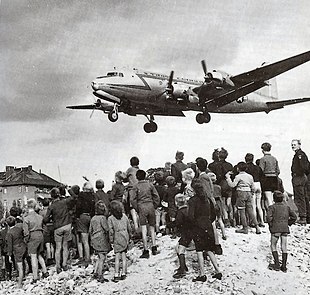
On this day in 1948, U.S. and British pilots begin delivering food and supplies by airplane to Berlin after the city is isolated by a Soviet Union blockade.

When World War II ended in 1945, defeated Germany was divided into Soviet, American, British and French zones of occupation. The city of Berlin, though located within the Soviet zone of occupation, was also split into four sectors, with the Allies taking the western part of the city and the Soviets the eastern. In June 1948, Josef Stalin’s government attempted to consolidate control of the city by cutting off all land and sea routes to West Berlin in order to pressure the Allies to evacuate. As a result, beginning on June 24 the western section of Berlin and its 2 million people were deprived of food, heating fuel and other crucial supplies.

Though some in U.S. President Harry S. Truman’s administration called for a direct military response to this aggressive Soviet move, Truman worried such a response would trigger another world war. Instead, he authorized a massive airlift operation under the control of General Lucius D. Clay, the American-appointed military governor of Germany. The first planes took off from England and western Germany on June 26, loaded with food, clothing, water, medicine and fuel.

By July 15, an average of 2,500 tons of supplies was being flown into the city every day. The massive scale of the airlift made it a huge logistical challenge and at times a great risk. With planes landing at Tempelhof Airport every four minutes, round the clock, pilots were being asked to fly two or more round-trip flights every day, in World War II planes that were sometimes in need of repair.

The Soviets lifted the blockade in May 1949, having earned the scorn of the international community for subjecting innocent men, women and children to hardship and starvation. The airlift–called die Luftbrucke or “the air bridge” in German–continued until September 1949, for a total delivery of more than 1.5 million tons of supplies and a total cost of over $224 million. When it ended, the eastern section of Berlin was absorbed into Soviet East Germany, while West Berlin remained a separate territory with its own government and close ties to West Germany. The Berlin Wall, built in 1961, formed a dividing line between East and West Berlin. Its destruction in 1989 presaged the 1991 collapse of the Soviet Union and marked the end of an era and the reemergence of Berlin as the capital of a new, unified German nation.

6/25 ~ Today in history ~ The Last Packard

Image result for packard

The last Packard–the classic American luxury car with the famously enigmatic slogan “Ask the Man Who Owns One”–rolls off the production line at Packard’s plant in Detroit, Michigan on this day in 1956.

Mechanical engineer James Ward Packard and his brother, William Dowd Packard, built their first automobile, a buggy-type vehicle with a single cylinder engine, in Warren, Ohio in 1899. The Packard Motor Car Company earned fame early on for a four-cylinder aluminum speedster called the “Gray Wolf,” released in 1904. It became one of the first American racing cars to be available for sale to the general public. With the 1916 release of the Twin Six, with its revolutionary V-12 engine, Packard established itself as the country’s leading luxury-car manufacturer. World War I saw Packard convert to war production earlier than most companies, and the Twin Six was adapted into the Liberty Aircraft engine, by far the most important single output of America’s wartime industry.

Packards had large, square bodies that suggested an elegant solidity, and the company was renowned for its hand-finished attention to detail. In the 1930s, however, the superior resources of General Motors and the success of its V-16 engine pushed Cadillac past Packard as the premier luxury car in America. Packard diversified by producing a smaller, more affordable model, the One Twenty, which increased the company’s sales. The coming of World War II halted consumer car production in the United States. In the postwar years, Packard struggled as Cadillac maintained a firm hold on the luxury car market and the media saddled the lumbering Packard with names like “bathtub” or “pregnant elephant.”

6/24 – This day in history: Cigarette Warnings Mandated

Image result for cigarette warnings mandate

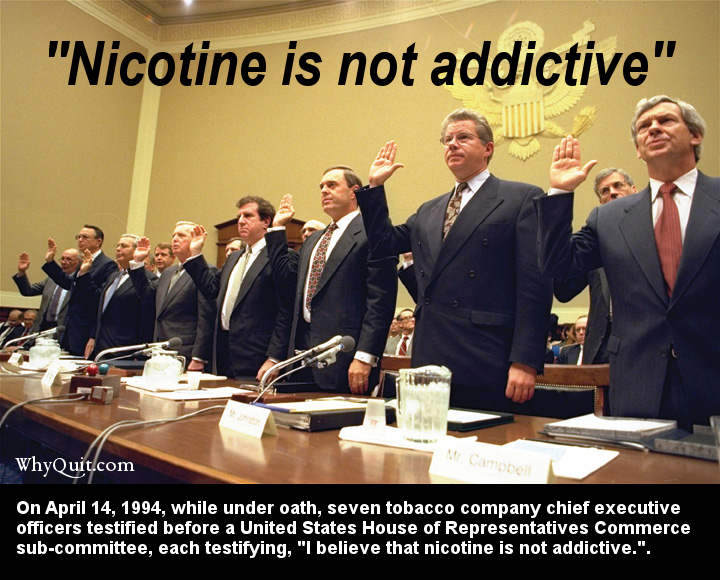
The Federal Trade Commission announces that, starting in 1965, cigarette makers must include warning labels about the harmful effects of smoking.

In 1973, the Assistant Director of Research at R.J. Reynolds Tobacco Company wrote an internal memorandum regarding new brands of cigarettes for the youth market. He observed that, “psychologically, at eighteen, one is immortal” and theorized that “the desire to be daring is part of the motivation to start smoking.” He stated, “in this sense the label on the package is a plus.”

In 1999, Philip Morris U.S.A. purchased three brands of cigarettes from Liggett Group Inc., then removed the statement from the packages.

The Family Smoking Prevention and Tobacco Control Act of 2009 requires color graphics with supplemental text that depicts the negative consequences of smoking to cover 50 percent of the front and rear of each pack. The nine new graphic warning labels were announced by the FDA in June 2011 and were required to appear on packaging by September 2012, though this was delayed by legal challenges.

In August 2011, five tobacco companies filed a lawsuit against the FDA in an effort to reverse the new warning mandate. Tobacco companies claimed that being required to promote government anti-smoking campaigns by placing the new warnings on packaging violates the companies’ free speech rights.

On 29 February 2012, U.S. District Judge Richard Leon ruled that the labels violate the right to free speech in the First Amendment. However, the following month the U.S. Court of Appeals for the 6th Circuit upheld the majority of the Tobacco Control Act of 2009, including the part requiring graphic warning labels.

In April 2013 the Supreme Court declined to hear the appeal to this ruling, allowing the new labels to stand. As the original ruling against the FDA images was not actually reversed, the FDA will again need to go through the process of developing the new warning labels, and the timetable and final product remain unknown.

June 23 ~ This day in history: Texas Annexed to United States

On June 23, 1845, a joint resolution of the Congress of Texas voted in favor of annexation by the United States. The leaders of the republic first voted for annexation in 1836, soon after gaining independence from Mexico, but the U.S. Congress was unwilling to admit another state that permitted slavery. Sam Houston, commander of the Texas army during the fight for independence from Mexico and the first president of the Republic of Texas, was a strong advocate of annexation.

Sam Houston… Mathew B. Brady, [between 1844 and 1860]. Daguerreotypes. Prints & Photographs Division

In 1845, the political climate proved more favorable to the request for statehood. On December 29, 1845, Texas officially became the twenty-eighth state in the Union although the formal transfer of government did not take place until February 19, 1846. A unique provision in its agreement with the United States permitted Texas to retain title to its public lands. Further, Texas was annexed as a slave state.

Texas is divided into various regions characterized by distinct cultures and climates. East Texas includes the forested area known as the “Big Thicket” and some of the wet, coastal marsh area. The region produces cotton, rice, and sugar cane, and its economy is centered on the Gulf Coast’s petrochemical and shipping industries. The eastern part of Texas continues to be culturally tied to the Deep South. West Texas includes the Davis Mountains, the northern High Plains of the Panhandle, and some of the Hill Country. Cattle and sheep ranching continue to thrive in the legendary land of the cowboy. Near the national border, Mexican culture remains particularly influential.

Camp Wagon on a Texas Roundup. William Henry Jackson, photographer, [ca. 1900]. Detroit Publishing Company. Prints & Photographs Division

Our roundup was the hardest of all work we had to do, but the most interesting, at least it was to most of us, because we then had roping and bul-dogging to do.

Dave Hoffman.” Sheldon F. Gauthier, interviewer; Fort Worth, Texas, ca. 1936-39. American Life Histories: Manuscripts from the Federal Writers’ Project, 1936 to 1940. Manuscript Division

June 22 ~ This Day in History – Harry Houdini

Houdini, King of Handcuffs

Legendary magician and escape artist Harry Houdini married Wilhelmina Beatrice Rahner on June 22, 1894. When they met, she was performing as one of the Floral Sisters at the Sea Beach Palace, in West Brighton Beach, New York; he was a virtually unknown magician. Partners in work and life for the next thirty-two years, the Houdinis never attempted escape from the bonds of matrimony.

“Houdini: houdinize, vt. To release or extricate oneself from confinement, bonds, or the like, as by wiggling out.”

Funk and Wagnall’s New Dictionary as quoted on Houdini LetterheadThe American Variety Stage: Vaudeville and Popular Entertainment, 1870-1920.

Harry and Beatrice Houdini in Nice, France, full-length portrait, standing, facing front. 1913. The American Variety Stage: Vaudeville and Popular Entertainment, 1870-1920. Rare Book & Special Collections Division

Born in Budapest, Hungary, as Ehrich Weisz in 1874, the future Houdini emigrated with his family to Appleton, Wisconsin, when he was just a few years old. His father had been hired as the rabbi of a Jewish congregation there, but the job lasted only a few years. As the family struggled to make ends meet young Erich Weiss, as his name was now spelled, held a variety of low-skilled jobs and ran away from home at least once. Many stories, some of them fanciful, surround the early days of his performing career. In about 1890, in New York City, he adopted the name Harry Houdini as part of a Houdini Brothers magic act. The name was chosen to invoke the reputation of Jean-Eugène Robert-Houdin, the father of modern magic. In his solo performances as a magician, Houdini appeared in amusement parks, sideshows, and vaudeville. He also began to augment his act with handcuff tricks.

In the early years of their marriage, with Beatrice as his assistantHoudini advertised that he had “escaped out of more handcuffs, manacles, and leg shackles than any other human being living.” By 1899, the “King of Handcuffs” had dropped magic from his act and left for a European tour, where he was acclaimed as a brilliant “escapologist.”

Houdini and the Water Torture Cell. ca. 1913. The American Variety Stage: Vaudeville and Popular Entertainment, 1870-1920. Rare Book & Special Collections Division

In 1904, Houdini returned to America triumphant. Over the next fifteen years, he perfected a series of amazing acts including extricating himself from the jail cell of presidential assassin Charles Guiteau, escaping from a water-filled milk can, and performing his world famous water torture cell routine. By the 1910s, he returned to magic and was soon embraced as a master magician as well as a brilliant escape artist. In 1918, hundreds gasped as Houdini made a 10,000-pound elephant disappear on the brightly lit stage of New York City’s Hippodrome Theater.

During the 1920s, Houdini dabbled in film, but primarily devoted himself to exposing fraudulent mediums—a campaign that resulted in a highly-publicized conflict with mystery writer and spiritualist Sir Arthur Conan Doyle. Ever the performer and self-promoter, Houdini brought his anti-spiritualist crusade to the stage. With hundreds watching, he revealed the techniques mediums used to “communicate” with the dead, and he authored a book, A Magician Among the Spirits, in 1924.

Wealthy and world famous, Beatrice and Harry Houdini celebrated their 20th wedding anniversary in 1914 on board the S.S. Imperator of the Hamburg-America Line. Fellow passenger Theodore Roosevelt was so amazed by Houdini’s shipboard performance that he invited Houdini to meet his grandchildren. Five years later, the couple celebrated their silver anniversary with a formal dinner party at the Alexandria Hotel. Their marriage held strong until Houdini’s sudden death on Halloween, October 31, 1926. The “Genius of Escape” was just fifty-two years old.

The world-famous self-liberator Houdini will escape from the water torture cell, Cardiff, Wales. 1913. American Variety Stage: Vaudeville and Popular Entertainment, 1870-1920. Rare Book & Special Collections Division
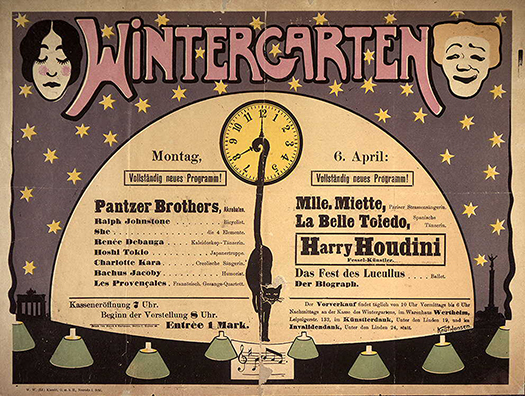
Houdini at the Wintergarten, Berlin. 1903. The American Variety Stage: Vaudeville and Popular Entertainment, 1870-1920. Rare Book & Special Collections Division
Houdini, “the genius of escape,” on the Orpheum Circuit. 1923. The American Variety Stage: Vaudeville and Popular Entertainment, 1870-1920. Rare Book & Special Collections Division

6/21 – This Day In History – The Ferris Wheel Introduced 1893

Related image

  • June 21, 1893 the Ferris Wheel was introduced at the
  • World’s Columbian Exposition in Chicago, IL.

When George Washington Gale Ferris heard about the Chicago, Illinois World’s Columbian Exposition scheduled for 1893, he went to Chicago to try his hand at the challenge of creating a monument that would surpass the Eiffel Tower of Paris.

Ferris set about to create his namesake wheel, something he felt would “Out-Eiffel Eiffel.” Expo directors feared for the safety of people that would ride the giant wheel, but Ferris managed to push those fears aside and build his creation.

Not your run of the mill carnival ride, this mighty wheel needed investors to cough up $400,000 to have it built (a lot of money in those days!). This giant wheel was 264 feet tall (taller than any other exhibit) and had 36 cars, each with 40 revolving chairs that could hold up to 60 people.

Total capacity of the wheel at one time was 2160 passengers! About 38,000 people a day rode the Ferris Wheel, each ride lasting 20 minutes. The non-stop part of the ride was 9 minutes, with the other 11 minutes taken by loading and unloading passengers.

The wheel stood past the end of the Exposition, and was demolished in 1906 after about 2.5 million people had ridden on it. A ticket to ride the mechanical marvel cost 50 cents. Show organizers (allegedly) cheated Ferris out of his share of the profits, and he spent the next couple years in court trying to get his money.

The immense ride was dismantled and moved to Lincoln Park, Chicago after the Exposition, and then taken apart and rebuilt for the 1904 St. Louis (Missouri) World’s Fair. It was there that it was dismantled for the last time in 1906.

6/20 This day in history ~ 18-yr-old Victoria was crowned Queen

Image result for queen victoria

Queen Victoria served as queen of Great Britain and Ireland from 1837, and as Empress of India from 1877, until her death in 1901.

Queen Victoria and Prince Albert

In 1840, Queen Victoria married her cousin, Prince Albert of Saxe-Coburg and Gotha, the son of her mom’s brother. The couple met when Victoria was just 16; their uncle Leopold suggested they marry. Since Victoria was queen, Albert couldn’t propose to her. So she proposed to him on October 15, 1839.

At first, the British public didn’t warm up to the German prince and he was excluded from holding any official political position. At times their marriage was tempestuous, a clash of wills between two extremely strong personalities. However, the couple was intensely devoted to each other. Prince Albert became Queen Victoria’s strongest ally, helping her navigate difficult political waters.

After several years of suffering from stomach ailments, Victoria’s beloved Prince Albert died of typhoid fever in 1861 at the age of 42. Victoria was devastated, sleeping with a plaster cast of his hand by her side, and went into a 25-year seclusion.

Queen Victoria’s Height

Despite her feisty temperament, Queen Victoria was famously tiny in stature, measuring just 4 feet 11 inches tall. Later in life, her weight ballooned, with her waist reportedly measuring 50 inches.

Victorian England, the Victorian Era

Life in Britain during the 19th century was known as Victorian England because of Queen Victoria’s long reign and the indelible stamp it and her persona placed on the country. Her strict ethics and personality have become synonymous with the era.